Showing posts with label Globalvoicesonline. Show all posts

Wednesday, November 23, 2016

Brazilian Activists Outsmart Facebook's Censorship of the Female Nipple

Screen capture from Mamilo Livre (Free the Nipple) homepage.

Screen capture from Mamilo Livre (Free Nipple) homepage.

In September 2016, psychologist and blogger Letícia Bahia and photographer Julia Rodrigues launched the campaign Mamilo Livre (Free Nipple), featuring print portraits of both men and women with bare chests, aiming to challenge objectification of women's breasts and advocate individual sovereignty over one's body. As the campaign encouraged people to print photos from the campaign's website and post them in public spaces, the posters were seen in many Brazilian cities.

But as people started to publish the campaign photos on social media, they encountered a barrier not seen in the offline world: Facebook blocked all the portraits featuring women and suspended the profiles of those who published them. This included both campaign's founders, as well as the page AzMina — a feminist digital magazine with over 80k followers, which helped support the campaign from its conception.

Julia and Letícia recently devised a way to outsmart Facebook's censorship: if you divide the photo of the nipple into four different photos and publish them simultaneously, Facebook will display it at people's feeds as a mosaic, where the nipple will be completely visible — but still not entirely present in one single photo, and thus not detected by its system.

The campaign's website made available an app where users can upload a photo of their nipple which will then be divided in four different photos.

The photos of the campaign are actually part of an older project conceived by Julia Rodrigues: On a Facebook page named “Pode Não Pode” (You can, you can't), she uploads photos of men and women with their bare chests and lets the network delete the ones it deem inappropriate — Facebook's technologies typically delete the ones featuring women. The result is an album where men's photos showing their nipples are untouched, where women's are either covered with a black tag or cropped above the nipples.

As she explains on the project's page:

Essas fotos fazem parte de um experimento meu dentro do facebook. Pessoas de todos os generos posaram para mim com o torso nu, sem apelo sexual ou pornografico. Quais fotos serão consideradas impróprias pelo público e pelo sistema do facebook? Quais serão as diferenças reais entre um retrato e outro? O que seria tão ofensivo em um mamilo que não é ofensivo em outro?

Those photos are part of an experiment of mine inside Facebook. People from all genders posed for me with their bared chests, without sexual or pornographic appeal. Which photos will be considered improper for the public or for the Facebook system? What are the real differences between one portrait and another? What is offensive in one nipple that isn't in the other?

Social media platforms such as Facebook and Instagram (owned by Facebook) prohibit any and all “graphic content” that pictures a woman's areola, but not men's. This has been challenged by activists around the world for the past few years. In 2014, Lina Esco's documentary ‘Free the Nipple’ investigated the United States obscenity laws in the United States, where it is illegal in 13 states for a woman to be topless in public.

Obscenity laws in Brazil are similar — women exposing their nipples in public could fall into the Article 233 of the country's penal code, which deals with practicing obscene acts in public. Although cases where women were detained for this are increasingly rare, Brazilian society hardly tolerates a female nipple to be seen in public. This comes as a shock to many foreigners who come to visit the famous Brazilian beaches. But indeed, contrary to European beaches, where the practice is somewhat common, in Brazil being topless (if you're a woman) isn't accepted at all.

When the Danish gymnastics team visited Rio de Janeiro to give a workshop in 2013, they sunbathed topless in Copacabana and were snapped by a photographer of Brazil's media outlets. The case gained so much media attention in Brazil at that time that the team's trainer approach the press to explain they were unaware of local custom.

Gradually this has been challenged in Brazil, with many feminist movements doing marches attended by many women who, in protest against hypersexualization and shaming of women's bodies, bare their chests in public. This has been accompanied by increased frustration with Facebook and Instagram's Community Standards, which allow specific non-sexual images of women's nipples (they make exceptions for breast feeding and post-mastectomy photos), but not others. They also allow some images of graphic violence, such as photos of people who have been tortured. Hypersexualized images of female breasts are also considered appropriate (as long as the nipple is not clearly visible), while photos including women's nipples ranging from indigenous ceremonies in Australia to campaigns against breast cancer are prohibited.

In Letícia and Julia's campaign's manifesto, they demand equal rights for men and women and a stop to shaming of the female nipples:

Women and men are equal in rights and obligations. Freedoms that are available to one group must be available to all. 2. Hiding or displaying the nipples should be a choice, not an obligation. For anyone, of any gender, race or religion and at any age. 3. No one has to be ashamed of their nipples (or anyone else's nipples). It's a part of the body like any other, and everyone is born with nipples. 4. Nipples are different from each other. Each one has unique colors, sizes and shapes. They're as diverse as people, and diversity is beautiful. 5. Nipples are not public. The fact that they are being shown does not mean they're at disposal. 6. Nipples are not inherently sexual. They might be, but they don't need not be, like any other part of the anatomy. 7. Individuals are sovereign over their bodies. Other people's shame and lust can't prevail over the free enjoyment of one's body.

In a Facebook post, AzMina writes:

Peito, mão, orelha: tudo isso só é erótico quando eu quiser e não quando você decidir.
Vocês sabiam que os homens também tiveram que protestar pelo direito de andar sem camisa? Pelo direito de seus peitos não serem vistos como algo obsceno. Pelo direito de atribuir significado próprio ao próprio corpo.

Breast, hand, ear: all of this is erotic when I want and not when you decide. Did you know that men also had to protest for the right of walking around shirtless? For the right of their breasts to not be seen as something obscene. For the right to give their own meaning to their own bodies.


Read Full Story from Global Voices Advocacy https://advox.globalvoices.org/2016/11/23/brazilian-activists-outsmart-facebooks-censorship-of-the-female-nipple/
This article by Taisa Sganzerla originally appeared on advocacy.globalvoicesonline.org on November 23, 2016 at 09:57PM

Rumors of Moldy Buns Trigger Wave of Online Harassment at Chinese University

Moldy mandarin orange. Photo released to public domain via Wikimedia Commons.

Moldy mandarin orange. Photo released to public domain via Wikimedia Commons.

Online complaints about food quality are a persistent fear for restauranteurs and food companies, who often depend on positive reviews to keep their businesses afloat.

But in a recent case in China, it is the complainer — not the restauranteur — who is suffering for his negative comments about the food at his university cafeteria.

Mainland Chinese blogger Wang Zhian has documented an online incident of an university student being harassed by a school restaurant owner, school and education authorities and public security police for complaining about food quality on Weibo.

The student, whose Weibo screen name is @“highest authority Si Sailou” (@最高权力西塞罗), was accused of spreading rumors about moldy buns at the university restaurant. He was forced to make a public apology. He has now deleted the apology and all his Weibo posts, presumably due to a flood of harassing comments from other netizens.

When he raised the issue with the restaurant owner, he was told that the black spots on buns were caused by fermentation of a brand of yeast called “Angel yeast”.  Later, an expert on the issue stepped in and clarified that the black spots were not caused by yeast fermentation. But the clarification has not brought justice to Si. He is still missing in the online world.

Here is the timeline documented by Wang. All the quotes were retrieved from screen captures of Si's Weibo account:

November 18

10:26 AM University student @highestauthority Si Sailou from Lanzhou Finance university published a post on his Weibo with a photo showing buns with black spots on them. The post read:

@蘭州財經大學 民族餐廳發霉「清真」包子豆槳等食品屢次愚弄在校大學生,很多校友多次抱怨清真餐廳過期變質食品泛濫,買回去之後發現變質要求更換卻發現全都是變質的。難道是伊斯蘭教清真食品凌駕於中華人民共和國食品安全法?
請@甘肅食品藥品監督 […] 及時派人依法處理並給予在校大學生一個交代。

@Lanzhou Finance University There are several incidents that students have been cheated by the ethnic restaurant’s molded Muslim buns and soya bean food products. Many alumni complained that the Muslim restaurants sold expired food. When they found out that the food was rotten and demanded exchange, the food they got in exchange was the same. Is that because the country’s food security law cannot rule over the Muslim food? Please @Gansu Food and Medicine Quality Monitor […] send someone to deal with the matter according to law and respond to the students.

He got the photo from his fellow student via QQ, a very popular mobile social media app, and many echoed that they had similar experience. A few had diarrhea after eating at the restaurant. He confirmed these allegations with others and decided to write the post.

Soon after the post was published, he received a private message via Weibo from the restaurant asking him to go there by 1pm, or they would report to the police. Si ignored the message and updated his friends about the complaint development on a chat group.

A student complained about the black spots on buns online and harassed by police, school and restaurant owner. Image from Weibo.

A student complained about the black spots on buns online and harassed by police, school and restaurant owner. Image from Weibo.

3:00 PM The police station called Si, warned him that if his post had been shared more than 500 times, he would be in trouble. The police wanted to talk to him and urged him to settle the matter with the restaurant owner.

The Rumor Law was passed in 2013 and it criminalized unverified information which has been viewed 5000 times and retweeted 500 times online. Si wrote on Weibo that the police would come to him soon after the phone call.

Ten minutes later, the police came, telling him that the restaurant owner reported the case and that they had to escort him to the restaurant. They said that they would ask relevant authorities to check on food quality. If the buns had a problem, the authorities would settle the matter with the school. If not, Si’ post would be handled as a defamation of the restaurant.

When they arrived at the restaurant, an university party leader was there waiting for Si. The restaurant owner took out the buns from the food draws and some had black spots on them. He said that they were caused by fermentation of yeast, not mold.

The university party leader then asked Si to delete the post and write a “clarification”.

5:00 PM Si deleted his post and wrote:

剛和學校領導、餐廰老皮一起去了餐廳後㕑,看了㕑師剛出來的包子,剛蒸出的包子也有一黑點不是霉點。㕑師解釋我之前發微博提到的包子上面的霉點,是發酵粉的問題,冬天天氣冷發酵粉入水沒有散開,是誤會。在此給學校,餐廳造成的不良影響表示歉意。

I just went to the restaurant kitchen with school leader and restaurant owner. We saw that the black spots on the buns took out of the steamer were not mold. The chief explained that the black spots were caused by fermentation in winter – the yeast fails to dissolve in water. This is a misunderstanding and I apologize for the adverse consequence I bought to the school and to the restaurant.

According to Wang's report, the above message was read out loud by the school leader and sent out when they were still at the restaurant. Fifteen minutes later, the official Weibo of Lanzhou Finance University also published a post, clarifying that the black spots were caused by “Angel yeast”, not mold.

All parties then went to the police station to file a written record of the incident. During the process the school leader reminded the police officer to write in the manner that the report would not affect the future of Si. Upon finishing the written record, the school leader asked Si to make an apology to the university for ruining the school's reputation. Si then wrote on Weibo:

本人今天中午发一条微博,对包子黑点的误解引起了恶劣的影响,对民族餐厅造成了恶劣声誉影响。经校长傅德印调查,和平派出所张国宏同志的调解和老板的宽容,本人删掉了微博,接下来连续几天做道歉,直到恢复声誉[doge]@甘肃省教育厅@甘肃食品药品监督@甘肃发布@兰州发布@兰州财经大学

I published a Weibo around noon time today, caused misunderstanding about the black spots on the buns and ruined the ethnic restaurant’s reputation. Upon the investigation led by university principal Fu Deyin and comrade Zhang Guohong from Heping police station, also thanks to the open mindedness of the restaurant owner, I deleted the Weibo and will make public apology in coming days until reputation [of the authorities] were restored @Education Bureau of Gansu province @Gansu Food and Medicine Quality Monitor Bureau @Gansu Information @Lanzhou Information @Lanzhou Finance University.

10:46 PM Si published a 1500 word apology letter on Weibo, revealing details of the day. Attached to the post were images from a popular TV drama “Drawing Sword” which is a heroic story about the People's Liberation Army. The apology went viral online and criticism of the authorities poured in.

November 19

12:00 AM The school leader called up Si and raged over the phone, asking him to go to the police station tomorrow and explain to the police what had happened. Si deleted his apology at once and called up the police station. But the police did not expect his call and his visit.

2:00 – 3:00 AM Out of panic, he wrote several Weibo posts between:

各位互关的好友,你们好,首先感谢你们的热心帮忙,但是我下一条道歉的微博请不要转发,不要转发,不要评论,不要评论。也不要到我学校微博和教育厅微博去评论。你们这样过了嘴瘾口无遮拦,会把我坑死的。求你们了。我那个道歉被你们评论歪了,歪到其他意思了,真的。求你们什么都不说。[悲伤]

Dear friends, I appreciate your help but please do not repost my next apology, please do not repost it and do not comment. Do go to the university and education bureau’s Weibo to comment. You guys have fun commenting, but I will be buried. Please. My previous apology has been distorted by your comments, and its meaning is twisted. Really, I bet you not to say anything. [Crying face]

【不要转发和评论,帮作证我是真心实意道歉澄清错误的】 [可怜][可怜][可怜]我诚挚地道歉,确实是冤枉了餐厅。前几个道歉微博是我自己写的,没有人逼我或者是劝我。发自内心地为餐厅澄清错误。但是有一些网络喷子暴民不明真相就跑到我微博、学校微博、教育厅微博去肆无忌惮地谩骂叫嚣和骂我,你们这么做图一时嘴快,可曾想过我的感受。这些肮脏评论容易对我造成很严重的后果可曾想过?所以请不要评论和转发,希望我的鲁莽行为得到学校的原谅。什么都不说,这是最吼的。

[Don’t repost and comment. Pls just bear witness that I am sincere in my apology] I am here to make a sincere apology. I really wrongly accused the restaurant. I wrote the apology by myself, no one forced me or compelled me to do so. I am genuine in correcting my mistake and clarifying the matter. But some internet mob came to my Weibo, the school’s Weibo and the education bureau’s Weibo, cursing me and the authorities. You guys have fun commenting, have you considered my feelings? Your dirty comments can have a very negative effect on me. Please don’t comment and report. I hope the school will accept my apology for my thoughtless behavior. I won’t talk about this anymore.

He deleted all his posts on Weibo that night and leave just one message behind:

#我深深地爱着这个国家##我深深地爱着这个国家#

#I am deeply in love with this country# #I am deeply in love with this country#

Netizens have found other ways to participate in the incident. One of them carried an experiment using Angel yeast to make buns. Even if the yeast does not dissolve in the water fully, there aren’t any black spots.

More experts said that the most likely cause of the black spots indeed was mold.

On 21 November, the university, the restaurant and representative from “Angel Yeast” conducted another experiment at the school restaurant. This time, no bun had black spots. “Angel Yeast” published on its official Weibo a post stressing that the black spots were not caused by its products.

Thus far, there is no explanation of the cause of black spots on the buns. And Si is still missing from the online world.


Read Full Story from Global Voices Advocacy https://advox.globalvoices.org/2016/11/23/rumors-of-moldy-buns-trigger-wave-of-online-harassment-at-chinese-university/
This article by Oiwan Lam originally appeared on advocacy.globalvoicesonline.org on November 23, 2016 at 09:26PM

Lebanese Prime Minister Hariri Bans Photojournalist for this ‘Unofficial’ Photo

Lebanese Prime Minister Saad Hariri does not seem to like this "unofficial" photo of him by Photojournalist Hussein Baydoun. Photo used with permission

Lebanese Prime Minister Saad Hariri does not seem to like this “unofficial” photo of him by photojournalist Hussein Baydoun. Photo used with permission

Lebanese activists took to social media on November 16, 2016 to show solidarity with photojournalist Hussein Baydoun after he was forbidden from covering political events involving Prime Minister Saad Hariri at Beit Al Wasat, the PM's famed mansion.

Baydoun, who works at London-based news outlet The New Arab, was told that the ban was put in place due to an ‘unofficial photograph’ he took and published, in which Hariri has one finger in his mouth.

Hussein took the controversial photograph at the end of a press conference held on October 20, 2016, in Beit al Wasat, in which Hariri announced his backing of the candidacy of Michel Aoun to the presidency. Later that month, the parliament elected Aoun as the 13th president of Lebanon.

On Twitter, Baydoun posted the photo with a short comment in Lebanese Arabic that says “for you” (literal translation: “for your eyes”).

Wael Yaman, who manages the PM's website and heads the Digital and Social Media Department at the Future Movement (the political party led by Hariri), admitted on Twitter that Hussein wasn't allowed to enter Beit al Wasat before adding that:

Yaman continued to stand by the PM's decision under the pretext that such bans have also been issued in other democratic countries:

In that same conversation, Mahmoud Ghazayel, a journalist at the UAE newswebsite , defended the PM's decision by saying:

But another activist, who tweets at @CMPaso, pointed out that Hariri uses his mansion as a political headquarters and cannot, therefore, be considered a ‘private residence’ during events such as press conferences, which are of public interest:

The media office of the PM soon changed their position and told Baydoun that one of the reasons behind the ban placed on him was that they had restricted the event to “permanent” reporters only.

“Permanent reporters” are those who cover media events at the Parliament, the Presidential Palace, or the Government Palace. Usually, media outlets decide on the journalists and photojournalists they want in those places, who are then granted press passes by the relevant authority.

The PM's media office circulated this among mainstream media as well, claiming that Hussein had never been to Beit al Wasat. Baydoun told us he found “ironic” since this was the site in which he took the controversial photograph. He even shared with Global Voices another photo from the same day, in which he appears in a group with PM Hariri and other photojournalists at Beit al Wasat:

 15058766_10157786991295615_1346096877_n

Baydoun also told Global Voices that there were no prior e-mails sent restricting the event to permanent reporters. He maintains that the restriction was only put in place after he was forbidden from doing his job.

As for Beit El Wasat, media outlets are usually asked to send the names of the their journalists who will cover an event there, “for security reasons”.

Ironically, the PM himself gave another reason for the ban, contradicting his own media team.

Hariri's representatives have said that the photograph, which was supposedly the reason behind banning Baydoun from accessing Beit el Wasat, was actually taken by another photojournalist, Ali Alloush. In fact, both photojournalists captured the same shot but from different angles.

Ali's photograph, which was taken for news outlet Al Modon appears on the right. Baydoun's is on the left.

difference-between-mine-and-ali-photo

Photo uploaded by Mahmoud Ghazayel on Twitter. Left: Photo by Hussein Baydoun for The New Arab. Right: Photo by Ali Alloush for Al Modon.

Luckily for Baydoun, his newspaper, the New Arab, is supporting him, a privilege that other journalists do not have. In Baydoun's words:

I am fortunate that my newspaper is next to me, offering full support, but not all journalists are offered that. So, we need to have a real photojournalists’ syndicate that fights for our rights. The syndicate's chairman Aziz Taher is really nice, but despite all the viral posts today and the case that has been the talk of the town, he did not talk to me yet.

Baydoun does not belong to any political party, he tells Global Voices. He has his own political views, but he does not share them on Facebook. He even likes Saad Hariri's character. “He's a young man, just like us, who like to take selfies, and is a sportsman as well. I like Saad Hariri's character,” he said.

The photos he takes are not without political impact. His photographs taken during last year's ‘you stink’ protests against government corruption were featured in numerous outlets.

One of his most influential photos depicts a wall put up by the authorities to keep protesters away from the Grand Serail, the Governmental Palace. On one side of the wall, a member of Lebanese security forces stands alone, while on the other side hundreds of citizens are protesting.

baydoun1

Photo: Hussein Baydoun/Alaraby Aljadeed, used with permission

Baydoun is not afraid to take any photo but, he says he is really bothered by what he described as Lebanon's “ugly” censorship:

I'm trying to change the pictures and the concept..I'm a photojournalist, and it is due to my photographs during the recent protests that I have become known among other photojournalists.

Frustrated at the reality of photojournalism in Lebanon, he wonders:

What shall we tell students when they ask us what photojournalism is about?…Yeah a lot of photographers take pictures of politicians, but they don't post photos like the ones I took, because they need protection and money…I understand them, but I'm like them... I have bills, bank credit that I must pay, and I'm in a dangerous zone now. Till now my newspaper is beside me, other newspapers get rid of their photographers.

Despite the multiple pretexts given by the PM and his media team, Baydoun has continued to receive an outpouring of support on his Facebook page. Sara Sbeity wrote:

وقت رئيس الحكومة يخاف من المصوّر

When the prime minister fears the photojournalists

Another message of support was by Adam Hala Chamseddine, who wrote:

يذكر ان الراحل غسان تويني قاطع تغطية أي من نشاطات رئيس الجمهورية الراحل الياس الهرواي بعد أن أهان أحد المصورين في النهار على إثر التقاطه صورة أزعجت القصر، فما كان من الهرواي الا الاعتذار من المصور لكي تقبل النهار بالعودة الى أروقة القصر.

The late Ghassan Tueni (head of Annahar newspaper and a veteran Lebanese journalist), refused to cover activies of the late President Elias Hrawi after the president insulted one of Annahar's photographers, following the publication of a photograph that he found bothersome. Hrawi later apologized to the photographer, and Annahar newspaper thus began covering activities happening at the presidential palace again.

Today, Lebanese citizens do not expect acts of apology like that of the late president Hrawi towards Annahar newspaper. But that a politician can feel free to forbid a journalist from doing his or her job is something which many consider a red line. Baydoun's experience has left many to wonder if the syndicate of photojournalists will defend the rights of photojournalists if incidents like this arise in the future.


Read Full Story from Global Voices Advocacy https://advox.globalvoices.org/2016/11/23/lebanese-prime-minister-hariri-bans-photojournalist-for-this-unofficial-photo/
This article by Advox originally appeared on advocacy.globalvoicesonline.org on November 23, 2016 at 08:58PM

Porn Customers Have a Right to Privacy — But Who's Looking Out For Them?

No Porn. Public Domain Photo from Pixabay.

No Porn. Public Domain Photo from Pixabay.

Last September, an unidentified hacker obtained and released thousands of e-mail addresses, user names and passwords belonging to registered users of a website featuring hardcore pornographic contents, constituting a massive breach of users’ privacy rights.

According to the BBC and other sources, the data was stolen from the site known as Brazzersforum in 2013, but it was not until September 2016 the hacker posted this information online, violating the privacy rights of the users. Headquartered in Canada, Brazzersforum and Brazzers legally distribute photographs and videos of a sexual nature to paying customers.

User names and passwords were not the only things compromised. The Independent reports the data dump made it possible to access private conversations and comments expressed on the forum pertaining to the explicit nature of the site's contents.

The exposure actually appears to have been leaked from the Brazzersforum site, where viewers discussed their favourite scenes and performers.

However the site's privacy policy might be regarded as lenient and underprotective of subscribers’ rights. As seen in the excerpt below, the company reserves the right to share “any of the personal information” it has gathered with “affiliated or unaffiliated third parties”:

By the subscriber's use of the site, the subscriber expressly agrees that the site may, in its sole discretion share, disclose, transfer, rent, license or sell any of the personal information about subscribers that it has gathered or collected with affiliated or unaffiliated third parties.

Up until now, no privacy watchdog – to the best of our knowledge – has publicly condemned the leak or initiated an investigation into the matter.

Transfer of personal data without written consent, particularly sensitive data regarding sexual preferences, is illegal in some countries, such as Mexico. The European Union also has laws governing the transfer of personal data and mandates special precautions to be taken when the handover is made. In Canada, where Brazzers is incorporated, the Personal Information and Protection of Electronic Documents Act requires companies that collect personal data to disclose how such data will be used, and offers users clear avenues to remedy for violations of their privacy. But it does not strictly regulate the transfer of personal or sensitive data.

Roughly one year before the Brazzers privacy breach, in July 2015, a group identified as “The Impact Team” stole data from the adult social networking system Ashley Madison – targeted to people who are married or in a committed relationship and seek to have an extramarital affair. Tom Lamont wrote earlier this year for The Guardian that the Ashley Madison hack meant the leak of names of over 30 million users:

It’s six months since hackers leaked the names of 30 million people who had used the infidelity website Ashley Madison. Resignations, divorces and suicides followed.

More recently, on November 14, 2016, The Guardian also reported the hack of over 412 milliion accounts from Friend Finder Networks’ pornography and sex hookup sites, marking the second hack they've suffered in just over a year, and one of the largest data breaches ever recorded, according to monitoring firm Leaked Source.

What about the rights of adult film stars?

In 2011, the Adult Industry Medical Health Care Foundation, a US-based organization that tested pornographic actors for HIV and other STDs, investigated the possibility that its medical record database was breached to supply information for a web site called Pornwikileaks.com. This site has been giving out names, dates of births and addresses of thousands of adult film stars, many of whom could face retaliations from their families, friends and the current employers of those who now work in other industries.

Jeffery Douglas, an attorney for the clinic, mentioned at the time:

Accessing a database for improper purposes, violating medical privacy and extortion are all crimes in California.’

In addition to exposing the personal data of adult sites’ users, violations of online privacy rights also reveal gaps in legal protections for customers of websites with a global presence. In cases like these, affected users might hesitate to raise their voices, in order to avoid further exposure and shame once their online interactions or sexual preferences have been divulged.


Read Full Story from Global Voices Advocacy https://advox.globalvoices.org/2016/11/23/porn-customers-have-a-right-to-privacy-but-whos-looking-out-for-them/
This article by J. Tadeo originally appeared on advocacy.globalvoicesonline.org on November 23, 2016 at 08:12PM

Monday, November 21, 2016

Brazil Superior Court Rules in Google's Favor, Against ‘Right to Be Forgotten’

Youtube screenshot by JP Low. Fair use.

Youtube screenshot by JP Low. Fair use.

Brazil's Superior Court of Justice (STJ) decided unanimously that the “right to be forgotten” cannot be imposed upon Google or other search engines.

According to judiciary rapporteur Nancy Andrighi, the ruling stated that forcing search engines to adjudicate removal requests and remove certain links from search results would give too much responsibility to search engines, effectively making them into digital censors.

We can't interfere with the search engine otherwise we will lose the context of the information. We can't establish the responsibility of this provider. The presence [of the content] will remain, but when this provider links to the place where the photos are, then this other provider will bear the responsibility.

Information on the case itself hasn't been made public as the suit is being processed under secrecy of justice.

The decision goes against that of the European Court of Justice which decided in 2014 that search engines do bear responsibility for de-indexing search results when an individual could successfully claim a “right to be forgotten”, or a right to have “old or irrelevant” information about them removed from search engine results. The rule has been hotly disputed in the EU and elsewhere, particularly in cases where public figures have sought to have information removed from search results, in what appears to be an effort to improve their public image.

While the law has provided many people with a desirable shield from public scrutiny for things like traffic violations or debts that can appear on public record, it also raises critical questions about access to information about the activities of government employees and other influential public figures.

Last year, Brazil's Supreme Court also ruled in favour of Google in a process filed by legendary TV presenter Maria das Graças Meneghel, known as “Xuxa”. In the early 1980s, before her rise to fame, the TV presenter acted in a movie in which her character has a sexual relationship with a 12-year-old boy. Xuxa sued Google requiring the search engine to hide all results that associated her with the film.

According to informal research conducted by a Brazilian newspaper, in almost ⅓ of online defamation cases in Brazil, state courts decide in favor of the right to remove from the internet information that associates the interested party with defamatory or offensive facts, or to a crime of which the person has been absolved.

Brazil's  Supreme Court — which is a higher court than the STJ — will soon hear a different case on the right to be forgotten involving TV Globo, Brazil's largest TV network. The case is brought by relatives of Aida Cury, an 18-year-old girl who was brutally raped and assassinated in 1958, in a case that was never resolved. In 2008 TV Globo broadcasted a story on the case. The relatives sued the network, arguing that the story “unearthed a painful time for the family” and their lawyers invoked the thesis of the “right to be forgotten”.

The discussion is different in the two cases. “In the case of the STF ruling, the discussion is material: does a person have a right to forbid the public to talk about certain facts? In the case of the STJ ruling, the discussion is more procedural: if a person can direct a request for suppression to a search engine,” Mariana Melo e Cunha, a lawyer at the office who represented Google, told Global Voices.

Both decisions, of the Superior Court of Justice and the pending one in the Supreme Court in this particular case, will set a critical precedent for other courts in Brazil hearing similar cases.


Read Full Story from Global Voices Advocacy https://advox.globalvoices.org/2016/11/22/brazil-superior-court-rules-in-googles-favor-against-right-to-be-forgotten/
This article by Taisa Sganzerla originally appeared on advocacy.globalvoicesonline.org on November 22, 2016 at 01:47AM

Saturday, November 19, 2016

No Surprise: Backdoors and Spyware on Smartphones is the Norm in China

Remix image.

Remix image.

Kryptowire, a security firm, recently identified several models of Android mobile devices that have preinstalled permanent software, known as firmware, that serve as backdoor that collects sensitive personal data, including text messages, geolocations, contact lists, call logs and transmits them to a third-party server in Shanghai, China.

Without users’ consent, the code can bypass Android's permission model. This could allow anyone interested in a mobile user's data — from government officials to malicious hackers — to execute remote commands with system privileges and even reprogram the devices.

The firmware was developed by Chinese company Shanghai ADUPS Technology Company. ADUPS confirmed the report with a statement explaining that the software was a “solution” to a Chinese phone manufacturer’s demand to “flag junk texts and calls” in response to user demand. It said the collected messages would be analyzed to “identify junk texts” and “improve mobile phone experience.”

Kryptowire's research reveals that the collected information was protected with multiple layers of encryption and then transmitted over secure web protocols to a server located in Shanghai. The data transmission occurred every 72 hours for text messages and call log information, and every 24 hours for other personally identifiable information.

ADUPS explained that the “accustomed” firmware was accidentally built into 120,000 mobile products of one American phone manufacturer, BLU Products. After BLU raised the issue, ADUPS explained that the software was not designed for American phones and deactivated the program on Blu phones.

The news has been widely reported in foreign media as ADUPS is among the largest FOTA (firmware over the air) providers in the world. The company provides a cloud platform for mobile device management to over 700 million active users in 200 countries, which is equivalent to 70% of the global market share as it works closely with the world largest cheap mobile phone manufacturers ZTE and Huawei, both of which are based in China. In 2015 alone, Huawei sold more than 100 million smartphones.

Chinese netizens have not been surprised by the news. Reports about spyware preinstalled in Chinese mobile brands have circulated for many years among mainland and overseas Chinese speaking-communities. In 2014, Hong Kong Android Magazine reported that Xiaomi’s smartphones designed for overseas markets were automatically connecting to an IP in Beijing and that all documents, SMS and phone logs, and video files downloaded were being transmitted to a Beijing server.

In 2015, Germany-based security company G-Data also found out that at least 26 Android mobile brands had preinstalled spyware in their smartphones. The three biggest Chinese smartphone manufacturers, Xiaomi, Huawei and Lenovo were all listed.

China's newly passed Cybersecurity Law has provided legal ground for the smartphone’s backdoor operation. The law requires “critical information infrastructure operators” to store users’ “personal information and other important business data” in China.

Other laws, such as the Child Protection Bill (still in draft), also requires hardware companies to pre-install surveillance software on communication devices and legalize specific approaches to treating internet addiction, all in the interest of protecting children.

In addition to the surveillance of private data as required by law, Chinese Android phone users regularly download Android apps from unofficial third party app markets since Google left China in 2010. These Android markets are flooded with apps containing malware that can steal and manipulate personal data.

On November 16, the New York Times reported that American authorities say it is not clear whether this represents secretive data mining for advertising purposes or a Chinese government effort to collect intelligence.

In response to the news, many Chinese netizens are pointing out the abusive use of personal data and government surveillance has become the norm.

信息泄露人们早就见惯了,即使是被Gov监视人们也不会在意。we are nobody.

We are so used to the leaking of personal data. We don’t care about government surveillance anymore. We are nobody.


Read Full Story from Global Voices Advocacy https://advox.globalvoices.org/2016/11/19/no-surprise-backdoors-and-spyware-on-smartphones-is-the-norm-in-china/
This article by Oiwan Lam originally appeared on advocacy.globalvoicesonline.org on November 19, 2016 at 08:14PM

Friday, November 18, 2016

Despite Suppression, Founder of Prize-winning Chinese Citizen Journalism Website Remains Optimistic

Huang Qi celebrating with Tianwang volunteers after being released from prison in 2011. Photo: Supplied by Huang Qi.

Huang Qi celebrating with Tianwang volunteers after being released from prison in 2011. Photo: Supplied by Huang Qi.

This post was written by Catherine Lai and originally published on Hong Kong Free Press on November 12, 2016. The version below is published on Global Voices under a partnership agreement.

Despite the continued detention of his reporters and having been imprisoned twice, the founder of the citizen news site 64 Tianwang says suppression will help the organization grow.

Reporters Without Borders on November 7 awarded its Press Freedom Prize to 64 Tianwang, which is widely recognized as a pioneering human rights defence website in China.

In an interview with HKFP, Huang said that the award is a way to recognize the work of their volunteer citizen journalists, nine of whom are currently detained and five have been released on bail, according to Tianwang. Six Tianwang citizen journalists were detained for their coverage of the G20 summit in Hangzhou in September. One of them is still in detention.

Despite the continued crackdown, Huang Qi and his volunteers have continued their work.

In 1998, 64 Tianwang started out under a different name as an organization that focused on human trafficking, which Tianwang founder Huang Qi described as a “serious problem in the late 1990s.” The site was established the following year. Huang Qi, a Sichuan resident, founded the project with money from his previous career as a businessman and factory owner.

He told Hong Kong Free Press:

As we were helping these people who had gotten lost or separated from their loved ones or who had gone missing, we discovered that in the mainland, behind these cases were judicial corruption or human rights infringements, so we expanded our work.

At times, their work has earned Tianwang positive coverage from mainland media, including from the People’s Daily, which is the largest official newspaper of the Chinese Communist Party. But they have also been criticized for their reporting on human rights.

Huang was jailed for five years for subversion in 2003 after hosting on his site articles about the 1989 pro-democracy movement in China that resulted in the Tiananmen massacre. He was again jailed for three years for “possession of state secrets” after investigating allegations that poor construction contributed to the deaths of schoolchildren in the 2008 Sichuan earthquake. He said:

I’m scared of being sent back to jail too, but so many people are suffering worse than us. And our work can help alleviate their suffering […] We also believe that Chinese society will finally progress towards democracy and rule of law.

Today, Tianwang is an independent news site that posts articles and information about human rights incidents in China, including detentions by police, forced demolitions, petitioner activism and demonstrations.

Huang even stood up for the rights of disgraced former public security chief Zhou Yongkang, calling for the authorities to protect his rights and not to treat him as a scapegoat.

We hope that in mainland China, everyone will have an equal judicial environment, and that [they] will not use double standards to deal with Chinese officials.

Although the site is blocked in China, Huang thinks it is still reaching domestic readers. He said:

They have all sorts of tools to get around the blocks… and they have their own ways of sharing posts.

The site is read by thousands of Chinese citizens, rights organizations, foreign media, and government officials and police – some who are wary of the site reporting their misdeeds and others who are hoping for things to change.

When asked if he was worried that the award might cause suppression to increase, Huang said:

In 18 years, we’ve met with many kinds of suppression, but we’ve never yielded. We also think that this kind of suppression is a necessary condition to help us grow and help us perfect our work.

He said:

In 18 years, no 64 Tianwang volunteer has ever agreed to sign a confession drafted by the authorities […] The main reason they haven’t confessed is that they themselves believe that what they’re doing is right. Their actions are in accordance with the charter of the People’s Republic of China and its related laws, and Xi Jinping’s principle of the rule of law, and the principle of a harmonious society.

He told state media in 1999 that Tianwang would become a media organization on par with outlets like the Washington Post, the Associated Press, Agence France-Presse, and CNN.

When asked if he had attained this standard, he said:

Right now, our standard is still very poor, because we have poor material conditions and we are constantly met with suppression. But in the future, we will definitely do a great job.

Huang helping victims of the Sichuan earthquake in 2008. Photo: VOA.

Huang helping victims of the Sichuan earthquake in 2008. Photo: VOA.

Despite the authorities’ suppression of their work, Huang remains optimistic – to some, maybe, unreasonably so. Huang insists that the human rights situation is improving in China if viewed in the context of wider trends as opposed to individual cases, even though human rights organizations have said that the situation is deteriorating under current president Xi Jinping.

The human rights situation in mainland China has changed hugely in the past 18 years… I think that eventually – at worst in eight or ten years – China will achieve real press freedom.


Read Full Story from Global Voices Advocacy https://advox.globalvoices.org/2016/11/18/despite-suppression-founder-of-prize-winning-chinese-citizen-journalism-website-remains-optimistic/
This article by Hong Kong Free Press originally appeared on advocacy.globalvoicesonline.org on November 19, 2016 at 12:45AM

Netizen Report: Trump Win Triggers Safety and Surveillance Fears

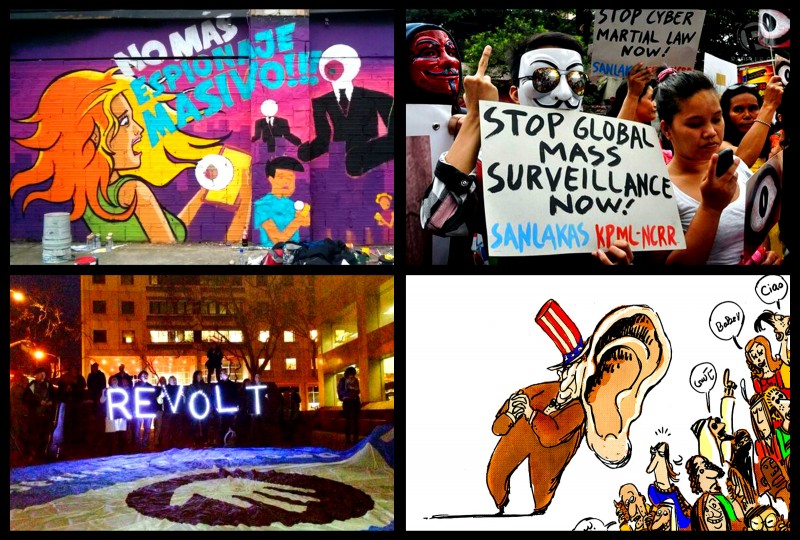
Images from February 11, from top left: a mural by War Design art collective in Bogota, Colombia; a public protest in Manila, Philippines (photo by ; a public rally in San Francisco, US (photo by Ellery Biddle); an anti-surveillance cartoon by Egyptian cartoonist Doaa Eladl.

Images from February 2014 anti-surveillance demonstrations, from top left: a mural by War Design art collective in Bogota, Colombia; a public protest in Manila, Philippines (photo by ; a public rally in San Francisco, US (photo by Ellery Biddle); an anti-surveillance cartoon by Egyptian cartoonist Doaa Eladl.

Global Voices Advocacy's Netizen Report offers an international snapshot of challenges, victories, and emerging trends in Internet rights around the world.

In the week since real estate and reality TV mogul Donald Trump won the US presidential election, reports of harassment and hate speech online and off have spiked in the United States.

Alongside many one-off incidents of identity-based harassment online, one case has stood out as a upsetting example of how networked technologies can be used to target specific groups. Dozens of African-American students at the University of Pennsylvania discovered on November 12 that a former classmate had used their Facebook profile information to build a list on the platform GroupMe, where instigators used racial epithets, called students “dumb slaves”, and promoted an event called “The Daily Lynching,” a reference to the post-Civil War phenomenon of mob killings of people of African descent.

Journalists and activists reporting hate crimes online are also routinely experiencing second-wave harassment, simply for speaking out about these acts of violence. According to research from the Southern Poverty Law Center, immigrants and people of color have been the most common targets of reported incidents. New York Daily News journalist Shaun King, who has been independently collecting reports in coordination with civic groups, estimated that 70% of those targeted are women.

It hasn’t helped that platforms like Facebook and Twitter are unable to respond to the volume of hateful and inciting speech on their platforms with strong and consistent policy enforcement, despite the fact that they forbid hate speech and incitement to violence. As Think Progress’s Lauren Williams points out, “Online harassment, whether it’s sexist, racist, anti-Semitic— is likely to stay unless tech companies decide untrammeled free speech no longer outweighs consumers’ desire to have abuse-free platforms.”

Will the US really institute a ‘Muslim registry’?

While these acts can’t be explicitly blamed on the President Elect, it is easy to see how supporters of a candidate who ran on a rhetoric of prejudice towards women, people of color, Muslims and Latinos, and proposed to create a registry of Muslims in the US, would act on the sentiments behind these ideas.

And what of the promised registry? Kansas Secretary of State and Trump advisor Kris Kobach says Trump’s transition team is discussing a “Muslim registration” system through which Muslims would carry a unique form of ID that denoted their religion. In a November interview with Reuters, Kobach said the team had also discussed reinstating the National Security Entry-Exit Registration System, a program developed under the administration of George W. Bush, in which male immigrants and visitors from select countries in the Middle East, North Africa and South Asia were required to undergo fingerprinting, interrogation and be photographed, and to maintain regular communication with immigration officials regarding their whereabouts.

The program was discontinued under the Obama administration after multiple organizations including the Council on American-Islamic Relations filed a civil suit arguing that the program violated constitutional rights to privacy. CAIR and the American Civil Liberties Union have vowed to take the government back to court if the registry comes to fruition.

Ethiopia blocks Global Voices, jails more writers

Befeqadu Hailu, a member of the Zone9 collective, a Global Voices author and one of the best-known voices in Ethiopia’s stifled media environment, was arrested on November 10, 2016. Authorities told him that an interview he gave on Voice of America about Ethiopia's state of emergency was the reason for his arrest. Since the government declared an official “state of emergency” last month, social media and mobile Internet connections have been periodically blocked and any form of speech or gesture indicating opposition to the government can merit punishment.

A few days prior to Befeqadu’s arrest, Global Voices contributors and contact in Ethiopia reported that the international citizen media website was no longer accessible in the country. Technical tests conducted by Global Voices’ partners have since confirmed their findings.

#IamMyOwnGuardian: Saudi women’s rights activist arrested

Saudi authorities arrested women’s rights activist Mariam al-Oteebi on November 1, following a complaint submitted by her father for “parental disobedience”. Al-Oteebi has been very active in the online campaign #IamMyOwnGuardian, launched by women’s rights activists in Saudi Arabia to call for an end to the male guardianship system. Under the system, women must have the consent of a “male guardian”, usually a father, husband, brother or even a son, to travel, get married, and work. According to Saudi activists, al-Oteebi has previously been harassed by her brother, over her Twitter profile photo, which displays her passport and national ID card.

Copyright case against Colombian biologist carries on

The trial of Colombian biologist Diego Gomez, who is facing charges for sharing an academic paper online for which he did not have copyright, has been postponed yet again. The case against Gomez, which has been in progress for three years is likely to set an important precedent in Colombia for the right to access knowledge online.

Bahrain protests are met with Internet service cuts

According to estimates by the Bahraini rights advocacy group, Bahrain Watch, Internet disruptions in the protest-village of Duraz, have cost residents at least 265,000 USD since 20 June 2016. A previous investigation published by the same group revealed that ISPs were imposing “an internet curfew” in Duraz, a hotbed of anti-regime protests, by deliberately shutting off internet service from 7:00 pm to 1:00 am on a daily basis by disabling cell towers and dropping about 90% of packets on fixed-line connections.

Turkey ups censorship game, blocks beloved anonymity tools

Turkey expanded the network throttling campaign it began in Kurdistan in late October by blocking circumvention tools including Tor, Hotspot Shield, Tunnel Bear and Psiphon. Though Turkey has instituted Internet blockages before, Turkish netizens say the current blocks are unusually expansive. The disruptions have been linked to the arrests of Kurdish party leaders.

Finally licensed to snoop: UK passes blanket surveillance law

The UK parliament passed the long-debated Investigatory Powers Act on November 16, codifying practices of requiring telecommunications companies to store and provide the government with access to a wide range of user data, and to break encryption at the government’s behest.

Ecuadorean draft law would protect privacy of citizens — and public servants

Ecuador’s national assembly is debating a draft law addressing privacy and data protection. The draft law aims to protect the privacy of personal data that can be found in databases, electronic archives and other physical and digital platforms. It also extends specific protections for data pertaining to public servants. This element of law has raised concern among academic and civil society groups.

Oman’s sweeping censorship of independent media

In Oman, the online independent newspaper Albalad which was launched in 2012 and covered a range of topics in the sultanate including politics, economy and culture, put an end to its operations on November 3. In a farewell post, the newspaper mentioned pressures it had faced in the past but did not specify a reason behind this decision. Albalad’s closure coincides with a broader crackdown on press freedom in Oman. Last August, the government closed the daily newspaper Alzamn and suspended its website over a report on government interference with the judiciary.

New Research


Subscribe to the Netizen Report by email


Afef Abrougui, Ellery Roberts Biddle, Weiping Li, Leila Nachawati, Laura Vidal and Sarah Myers West contributed to this report.


Read Full Story from Global Voices Advocacy https://advox.globalvoices.org/2016/11/18/netizen-report-trump-win-triggers-safety-and-surveillance-fears/
This article by Netizen Report Team originally appeared on advocacy.globalvoicesonline.org on November 18, 2016 at 08:26PM

Wednesday, November 16, 2016

Omani Film Critic Sentenced to Jail Over Facebook Posts

13579465355_f019a5615a_k

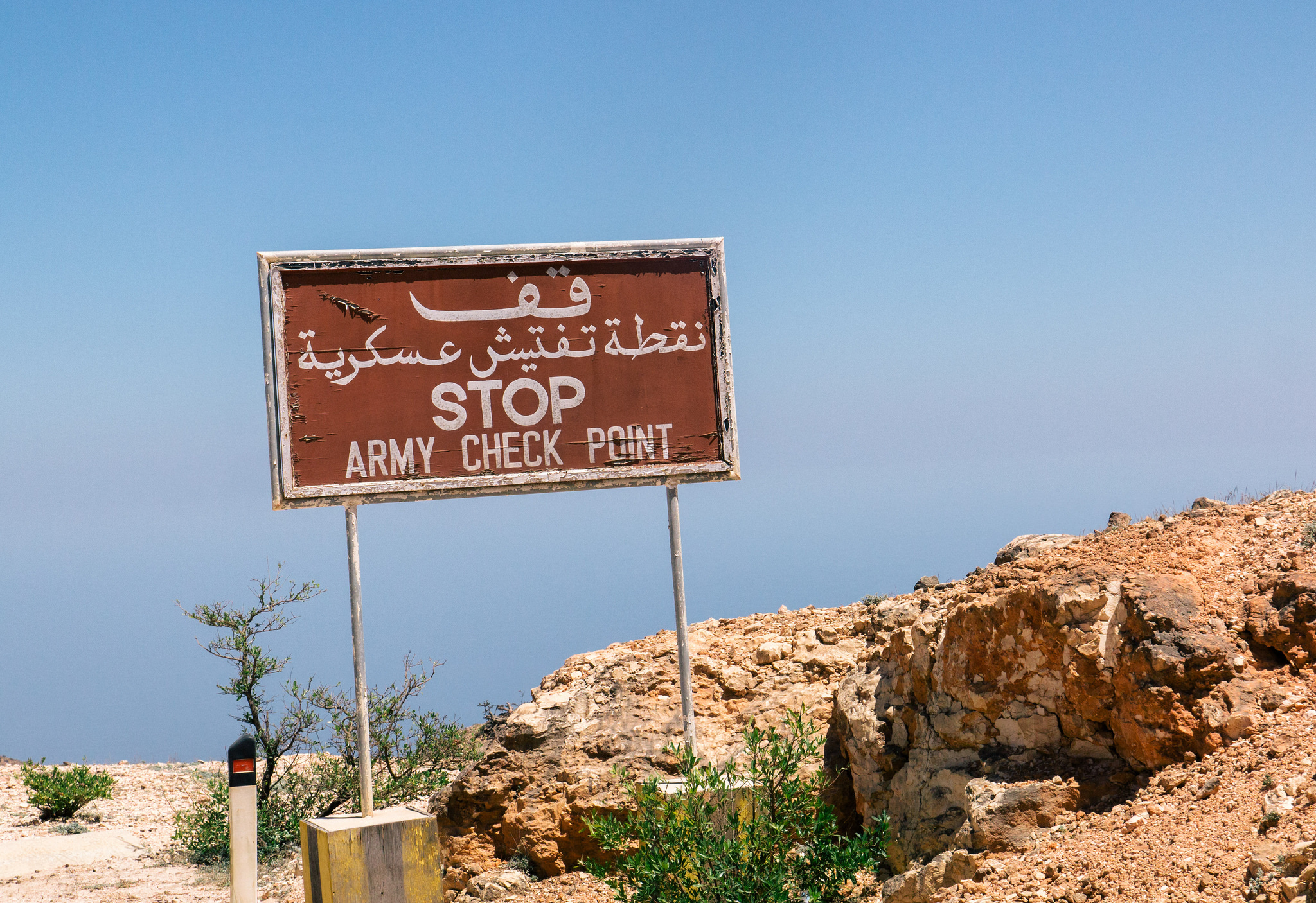
An army checkpoint in Salalah, the capital city of the southern Dhofar region in Oman, where leftist rebels launched a rebellion against the rule of the former Sultan in 1962. Dhofar was also a hotbed of anti government protests in 2011. Photo by Juozas Šalna.

On 8 November, a primary court in the Omani capital Muscat sentenced poet and film critic Abdullah Habib to three years in jail and a fine of 2,000 Omani Rials (US $5200) over his Facebook posts addressing religion, politics and human rights in the Sultanate.

According to the Omani Monitor for Human Rights, Habib was convicted of blasphemy, religious contempt, and “using the Internet in what would prejudice the state public order,” under Article 19 of the country's Information Technology Crimes Act.

Abudlah Habib. Photo shared on the Facebook page: Freedom to Omani Intellectual and Writer Abdullah Habib

Abdullah Habib. Photo shared by the Facebook page: Freedom to Omani Intellectual and Writer Abdullah Habib

Habib's arrest was triggered by a Facebook post calling for the Omani government to reveal the burial sites of rebels killed amid civil unrest in the region of Dhofar between 1962 and 1976. Leftist and Arab nationalist rebels then sought to overthrow the rule of the previous Sultan, the father of the current ruler Sultan Qaboos bin Said Al Said, and instead to establish a communist state.

Habib was first arrested when he appeared for investigation before the Omani Internal Security Service (ISS), in April 2016. The 53-year-old was detained upon arrival and held incommunicado before his release in early May.

He was arrested again on 11 July over posts addressing fasting and the Muslim call to prayer. According to a Facebook support page, in those posts, Habib denounced what he deemed “religious and social hypocrisy as exemplified in exaggerated feasts” during Ramadan, the Muslim month of fasting, and the use of loudspeakers to air Adhan or the call to prayer, particularly during times of rest in densely populated areas.

In a 10 May 2016 statement on the case, Amnesty International wrote:

Oman imposes arbitrary restrictions on the right to freedom of expression and in recent years many peaceful activists, government critics and others have been arrested and detained, often on public order charges or under vaguely worded penal code provisions that criminalize insulting the Sultan. Those detained are often held for several days before being released. Abdullah Habib’s case is an example of the pattern of intimidation by Omani authorities, including the ISS, of people who are simply exercising their right to freedom of expression.

Habib's experience forms part of a longer trend. Following unprecedented protests denouncing corruption and demanding jobs in February 2011, the Omani government launched a crackdown on independent media, activists, writers and bloggers. In the same year, the Sultan issued a cyber-crime law containing vague provisions that restrict free expression online. Article 17 of the law prescribes a prison term between one month and three years against those convicted of using information and communication technologies to distribute materials that “might prejudice or violate the public ethics”. Article 19 punishes by the same prison sentence those found guilty of distributing and possessing content that “might prejudice the public order or religious values”.

Attacks on free expression continue unabated in Oman today. On the same day of Habib's sentencing, an administrative court upheld a previous verdict confirming the Ministry of Information's decision to ban the daily independent newspaper Alzamn over a report on government interference with the judiciary.

Abdullah Habib, film critic

With a graduate degree in Critical Film Studies from the University of California at Los Angeles, Abudllah Habib has directed five short films and published twelve books in poetry and shot story collections. He also won several awards for his work including the Abu Dhabi Cultural Association Award in 1992, for his film This is Not a Pipe, and the General Secretariat of the Gulf Cooperation Council (GCC) award for excellence in cultural production in 2013. A member of the founding committee of cinema in the GCC, Habib translated into Arabic, writings in film criticism and literary theory including Robert Bresson’s Notes on Cinematography, and the Space of Literature by French writer Maurice Blanchot.

In an interview given to the online news site Al-Araby Al-Jadeed in February this year, Habib described the 2011 protests in his country as an “Omani spring”, adding that those protests represent “an unprecedented development in the modern Omani history, since they broke the barrier of fear within the Omani citizen.” He also described the “Arab Spring” as a “continuation of his generation's dream of freedom and a life of dignity”:

As long as there is a human being exploiting a human being, there are revolutionary dreams, and dreams make the future.


Read Full Story from Global Voices Advocacy https://advox.globalvoices.org/2016/11/16/omani-film-critic-sentenced-to-jail-over-facebook-posts/
This article by Afef Abrougui originally appeared on advocacy.globalvoicesonline.org on November 16, 2016 at 05:27PM

Latest Posts